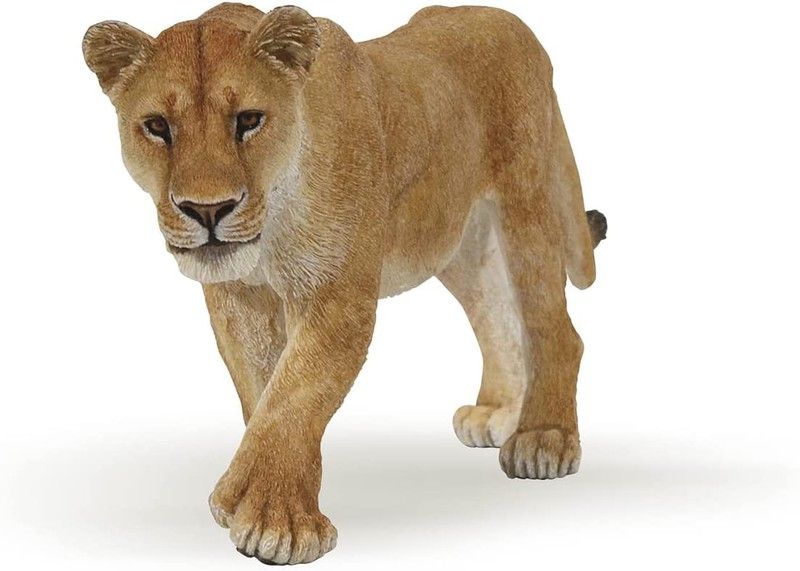
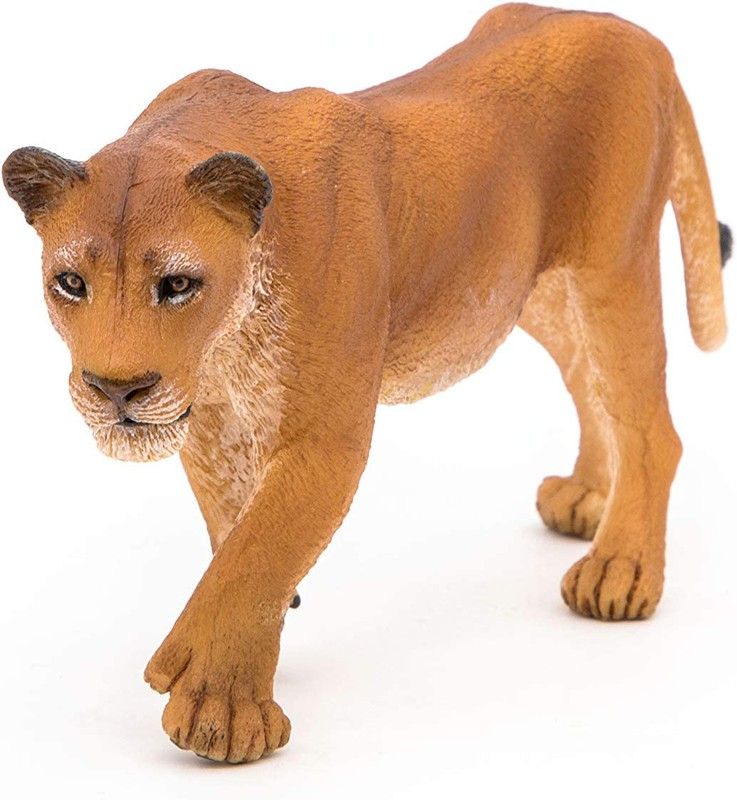
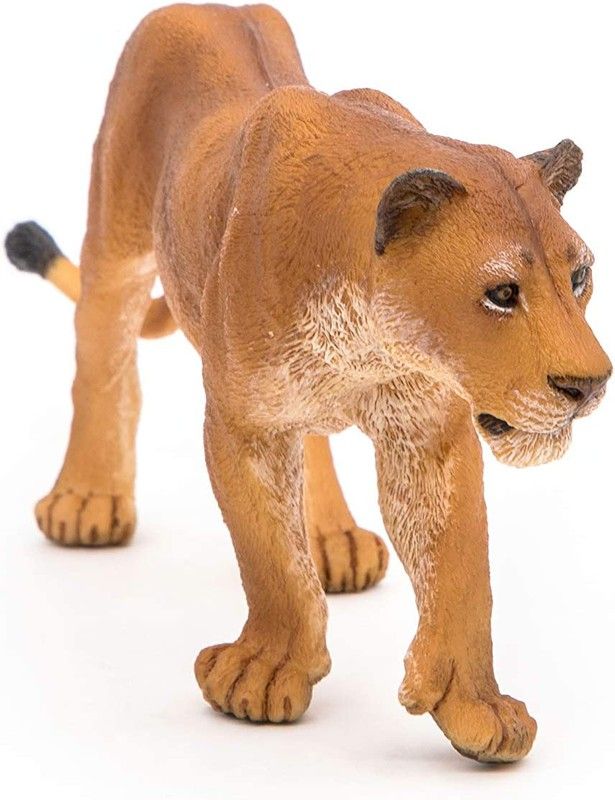
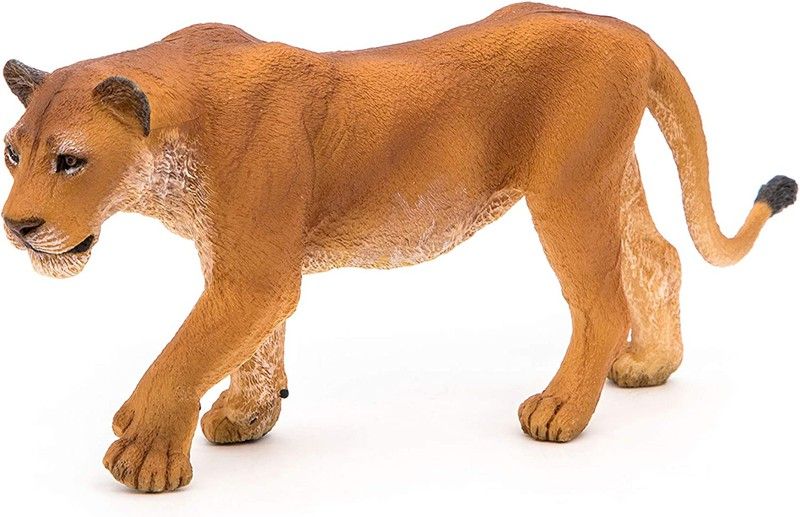
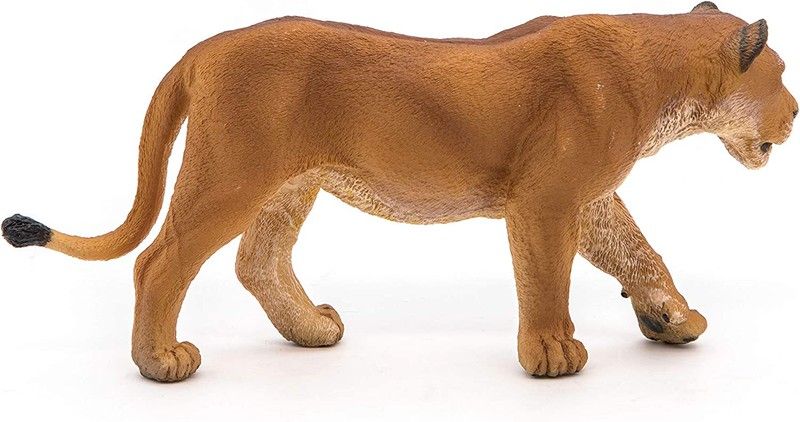
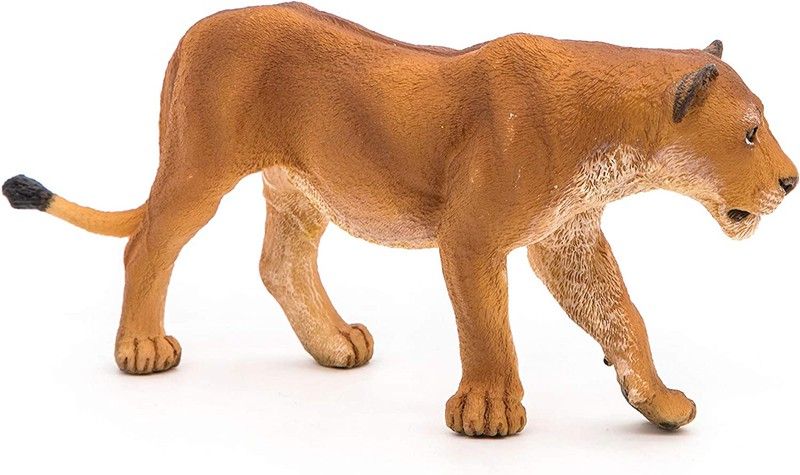
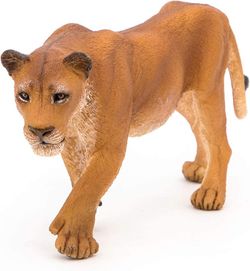
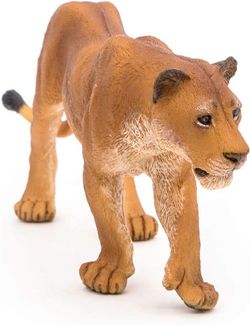
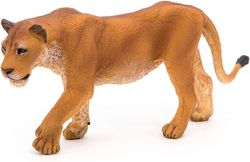
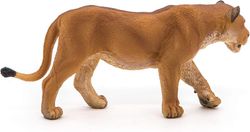
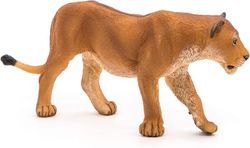
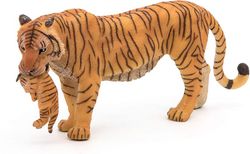
Complete your collection of big cats with the resin figure of the lioness of the savannah. Perfect for collecting or for making themed models with your own stories.
Recommended age: boys and girls from 3 to 6 years old.
Measurements: 13 x 7 x 3 cm.
Scientific name: Panthera leo. Family: Felidae. Average life: 10 - 14 years (Adult, In freedom). Speed: 80 km/h (Maximum, In very short periods). Body Mass: Male: 190 kg (Adult) and Female: 130 kg (Adult). Length: Male: 1.7 - 2.5 m (Head and body) and Female: 1.4 - 1.8 m (Head and body). Height: Male: 1.2 m (Adult, Shoulder) and Female: 1.1 m (Adult, Shoulder).
If they survive the hardships of childhood, lionesses living in a safe habitat, such as the Kruger National Park, they can often reach the age of 12-14 years, while lions rarely live more than eight years However, lionesses have been known to live up to twenty years in a state wild. In captivity, both males and females can live for more than twenty years.
They usually live in savannahs and grasslands, even though they can enter shrubby and wooded areas. Lions are especially social animals compared to other cats. A pride of lions is made up of females in a family relationship, their cubs, and a small number of adult males. Groups of lionesses often hunt together, attacking mainly large ungulates.
The lion is a top predator and key, although it can engage in scavenging behavior if given the opportunity. Although lions do not normally hunt humans selectively, some of them can become cannibals and seek human prey.
The lion is a vulnerable species and has experienced a possibly irreversible population decline of between 30% and 50% over the past two decades in its African range. ; populations are not viable outside of delimited reserves and national parks. Although the cause of this decline is not fully understood, habitat loss and conflict with humans are currently major concerns.
Lions have been kept in captivity since the days of Ancient Rome, and since the late 18th century they have been a highly sought after species on display in zoos around the world. The zoos themselves are collaborating on breeding programs to protect the threatened Asian subspecies. The males are very easy to distinguish thanks to their mane, which makes their heads one of the most widely known animal symbols in human culture.
It appears very often in literature, sculpture, painting, on national flags, and in contemporary films and literature.